Magnet ® Consulting on the 1983 Magnet Health Center Research Study
The 1983 Magnet medical facility research study still matters due to the fact that it offered the nursing profession a language for something leaders had seen but had a hard time to specify. Some healthcare facilities could attract and keep strong nurses even when the labor market was tight. Others might not. The difference was not luck, and it was not branding. It was organizational design, expert culture, and management discipline made visible through nursing.
That origin story often gets flattened into a single line, as if Magnet were only an award or a marketing credential. It is more useful, especially in major Magnet ® Consulting work, to go back to the study's useful ramification. The central question was never ever, "How do we win a classification?" It was, "What makes a hospital a location where nurses want to practice and can provide excellent care?" That distinction changes the entire tone of the work.
The Magnet Acknowledgment Program ® traces its roots directly to that 1983 study of "magnet" health centers. Later, the program itself grew, and the name formally changed to Magnet Recognition Program ® in 2002. Today, the designation is awarded by the American Nurses Credentialing Center, and the structure has actually become far more structured than the original questions. Still, the DNA of the program is the very same. It recognizes organizations for nursing excellence and quality client outcomes, and it provides a roadmap to nursing excellence rather than a basic checklist.
For leaders considering outside assistance, that history needs to shape what they expect from Magnet ® Consulting. Great consulting in this area is not about manufacturing a story. It is about assisting an organization see itself clearly enough to present evidence truthfully, close spaces intelligently, and construct a practice environment worthwhile of recognition.
Why the 1983 study still sets the tone
The original Magnet hospital idea has actually endured due to the fact that it named a real organizational phenomenon. Specific hospitals had the ability to attract and maintain nurses in tough conditions. That alone was a significant signal. Retention is never ever simply an HR metric. It reflects whether clinicians think their judgment matters, whether leaders respond to issues, and whether the practice environment enables expert nursing to work at a high level.
In useful terms, the study's legacy lives on in a very basic idea: nursing quality is organizational, not unintentional. A health center does not end up being magnetic due to the fact that of one charismatic chief nursing officer, one effective recruitment season, or one quality initiative that quickly goes well. It ends up being magnetic when structures, leadership expectations, and professional practice reinforce each other over time.
That is one reason organizations sometimes have a hard time when they approach Magnet as a documents job just. The documentation matters, obviously. ANCC requires composed paperwork connected to Sources of Evidence and the present Application Handbook. There are application fees, appraisal evaluation fees, timing requirements, and formal submissions that need to be managed exactly. But the deeper work begins much earlier. If the culture does not support the claims, the file becomes strained. Experienced customers can sense the difference between a coherent organization and a company attempting to compose around its weaknesses.
This is where skilled Magnet ® Consulting earns its keep. The specialist's real value is typically diagnostic before it is editorial. They assist leaders different 3 things that are easy to blur together: what the company thinks about itself, what it can show, and what ANCC really asks it to demonstrate.
From a study about healthcare facilities to an official recognition program
The existing Magnet landscape is more developed than the 1983 setting in every method. There is now a formal program through ANCC. Designation suggests a company has satisfied ANCC's Magnet requirements and is acknowledged for nursing quality. Organizations that accomplish designation might utilize official Magnet logo designs under trademark guidelines, which seems like a branding point, however it is moreover. Trademark security signals that the classification is managed, defined, and not open to casual interpretation.
This structure matters because Magnet is not a loose expert compliment. It is a recognized status with requirements, evidence requirements, and appraisal processes. ANCC likewise differentiates plainly in between designation and redesignation. That is an important operational reality that many newbie applicants ignore. Making acknowledgment as soon as is not the end state. Organizations that already earned Magnet Acknowledgment should pursue redesignation to continue being recognized.
That single fact changes the strategic lens. If a healthcare facility constructs a Magnet effort around heroic short-term work, it might endure the first cycle and then struggle severely later on. If it develops systems that can produce sustained proof, redesignation ends up being a continuation of expert practice rather than a rescue mission.
I have seen management groups understand this only after they begin collecting documents. Early on, some assume the hard part is crafting a compelling story. Later on, they understand the more difficult part is showing that quality is stable, distributed, and quantifiable. That is the point where the 1983 research study starts to feel less historical and more immediate. Magnet hospitals were not specified by a single thrive. They were defined by the conditions that consistently supported nursing practice.
The shift from the 14 Forces to the five-component model
Any major conversation of the 1983 study needs to acknowledge that the Magnet framework evolved. ANCC's model did not remain fixed in its earliest type. The present structure is organized around five parts of the empirical design:
- Transformational Leadership
- Structural Empowerment
- Exemplary Expert Practice
- New Knowledge, Innovations, & & Improvements
- Empirical Outcomes
This model emerged after a 2007 statistical analysis of appraisal ratings, and the 2008 conceptual model grouped the earlier 14 Forces of Magnetism into these 5 parts. That modification was not cosmetic. It made the structure more meaningful for organizations trying to comprehend how leadership, professional structures, innovation, and outcomes fit together.
For consulting work, this evolution is more than historic trivia. It affects how an organization frames its own story. Some leadership teams still discuss Magnet in broad cultural terms just, utilizing language like regard, professionalism, and engagement. Those themes matter, but the 5 components need more powerful positioning. They ask a company to show how management habits, professional structures, care practices, development activity, and results enhance each other.
The strongest applications typically do not deal with these elements as separate silos. They reveal connection. Transformational management creates the conditions for structural empowerment. Structural empowerment supports exemplary professional practice. That practice environment makes brand-new knowledge and improvements most likely to take root. The results then appear in empirical outcomes. When that reasoning is real, not made, the composed document checks out differently. It feels grounded since it is grounded.
What Magnet ® Consulting should really do
There is a consistent misunderstanding that consultants exist primarily to write. Weak consulting frequently shows the stereotype right. It shows up with design templates, generic calendars, canned messaging, and an incorrect promise that a refined narrative can make up for immature structures. That approach typically develops more work for the company, not less.
Strong Magnet ® Consulting does something much more requiring. It assists the organization analyze the space in between the historic spirit of Magnet and the existing ANCC requirements. The specialist should understand both the roots and the guidelines. If they lean only on history, they risk sentimentality. If they lean just on compliance, they risk producing a technically sufficient but culturally hollow application.
At minimum, consulting assistance should aid with a few difficult jobs:
- interpreting ANCC evidence requirements accurately
- identifying where existing structures really support the Magnet model
- surfacing locations where evidence is thin, inconsistent, or difficult to defend
- aligning leaders around realistic timing for application, written documentation, and appraisal
- preparing the company for designation along with redesignation thinking
Even this short list can be misinterpreted. "Identifying spaces "sounds easy until a team begins doing it truthfully. A space is not always the absence of a program. Often it is the lack of continuity. A council might exist on paper however do not have significant impact. A leadership practice may be appreciated locally but undocumented. A development effort may be promising however too immature to support a strong proof story. The expert's job is to make those differences noticeable before the organization devotes to timelines that are hard to sustain.
The discipline of evidence, not the performance of excellence
ANCC needs written documents connected to Sources of Evidence and the Application Handbook. That truth sounds procedural, however it has significant tactical effects. Health centers often have no shortage of activity. They have committees, instructional efforts, shared governance structures, leadership rounds, process improvement jobs, and quality control panels. The obstacle is not proving that individuals are hectic. The difficulty is revealing that the company's nursing environment is coherent and that results are not removed from nursing practice.
This is where lots of Magnet efforts end up being harder than expected. Organizations often find they have one of three issues. Initially, they have strong work but weak paperwork. Second, they have strong documents however fragmented work. Third, they have pockets of excellence that do not yet amount to organizational consistency.
Those are various issues and require various remedies. If the work is strong but inadequately recorded, the consulting focus might be on documents discipline and evidence mapping. If the documents is neat but the underlying work is fragmented, the more difficult job is functional, not editorial. If quality exists just in pockets, leaders need to decide whether to scale those practices before moving forward or accept a slower path.
A seasoned consultant will not treat these conditions as interchangeable. That judgment matters due to the fact that Magnet is pricey in time, attention, and official costs. ANCC posts different cost schedules, including an online application charge and appraisal evaluation fees due at written document submission. Even without talking about precise numbers here, the useful point is clear. This is not work to approach casually. When a company devotes, it should do so with a realistic assessment of readiness.
The difference in between designation and becoming magnetic
One of the more candid conversations in Magnet ® Consulting takes place when leaders ask whether they are" ready. "Generally, they indicate prepared to apply. Often, the deeper concern is whether they are ready to be evaluated versus a requirement that requests for proof of nursing excellence and quality client outcomes.
Those are not similar questions.
A company can be administratively prepared to submit an application and still be underdeveloped in one or more parts of the Magnet model. It can likewise be culturally stronger than it realizes however too irregular in its evidence systems to present itself well. The expert's function is not to flatter or discourage. It is to clarify.
This distinction ends up being especially important with redesignation. Teams that have actually currently achieved Magnet acknowledgment may assume they know the road. In some ways they do. They comprehend the procedure language, the internal governance demands, and the pressure of collecting evidence. But redesignation carries its own obstacle. The company needs to show that quality is sustained, not honored. Past accomplishment assists only if it matured into continuous practice.
That is why the trademarked phrase Journey to Magnet Quality ® is more than a motto. The word journey can sound soft in casual use, however in practice it explains a continual operating discipline. The very best organizations do not" get ready"for Magnet every couple of years. They preserve structures that constantly produce the evidence Magnet asks for.
Reading the 1983 study through a current management lens
The historical root of Magnet frequently resonates most with nurse leaders who have lived through retention strain, management turnover, or durations when frontline trust had to be reconstructed thoroughly. They recognize the initial problem immediately. A health center either establishes the conditions that attract expert dedication, or it pays for the lack of those conditions over and over again.
The five-component structure considers that impulse more structure. Transformational Management asks whether leaders can do more than handle. Structural Empowerment asks whether https://mariosqrh013.iamarrows.com/magnet-r-consulting-and-the-acknowledgment-of-health-care-organizations the organization disperses voice and opportunity in durable ways. Excellent Expert Practice asks whether nursing practice is more than appropriate, whether it is really arranged at a high level. New Knowledge, Developments, & Improvements asks whether the company finds out and advances, rather than merely maintaining. Empirical Results asks the most basic and hardest concern of all: what can you show?
This is where history and modern-day expectations meet. The 1983 study recognized hospitals that had become appealing expert environments. The current Magnet model asks companies to show, with disciplined evidence, how they create and sustain those environments.
A specialist who comprehends that family tree tends to work differently. They are less satisfied by slogans. They ask much better questions. When a group states,"We have actually shared governance,"the specialist asks how decisions move, where authority actually sits, and how the organization can demonstrate effect. When leaders say,"Our nurses are engaged," the expert asks what signs support that belief. When an organization points to a quality improvement effort, the consultant asks how that effort connects to the more comprehensive Magnet model and whether it reflects isolated success or system capability.
That design of questioning can be uncomfortable, however it is constructive pain. It avoids teams from mistaking self-description for evidence.
Practical judgment about timing and scope
Not every company should move at the same speed, and excellent Magnet ® Consulting need to resist one-size-fits-all timelines. ANCC provides digital tools and guides to support the appraisal procedure and interim monitoring during designation, which is handy, but tools do not replace organizational judgment. Leaders still need to decide when they have adequate maturity in their structures and outcomes to proceed with confidence.
In my experience, the most typical planning error is compressing the evidence-development phase because executives are excited for momentum. The objective is reasonable. Magnet recognition is distinguished, and leaders desire noticeable progress. But speed can be pricey if it requires teams to compose before their evidence is steady. That typically develops rework, aggravation, and internal skepticism.
A better technique is to believe in layers. Initially, verify tactical intent. Is Magnet being pursued as a nursing quality technique or as a branding workout with a nursing workstream connected? Second, evaluate preparedness against the real ANCC evidence needs. Third, enhance weak structures before they become documents liabilities. 4th, align submission timing with functional reality instead of aspiration. Those actions sound basic, yet skipping them is how companies turn a meaningful professional effort into a burdensome scramble.
What leaders need to continue from the original study
The most valuable lesson from the 1983 Magnet medical facility research study is not nostalgia. It is discernment. The study determined healthcare facilities that had ended up being locations where professional nursing might prosper. Today's Magnet Recognition Program ® provides healthcare companies a formal path to demonstrate that exact same type of quality through ANCC's standards, proof requirements, and appraisal process.
Leaders do not need to glamorize the past to respect it. They require to understand that Magnet began with an organizational reality that still holds. Nurses stay, grow, and carry out finest where management is trustworthy, expert practice is respected, structures are empowering, innovation is supported, and outcomes are taken seriously. The contemporary five-component model gives that reality sharper shape. The application process needs evidence. Redesignation needs remaining power.
That is the genuine work of Magnet ® Consulting when it is succeeded. It connects the founding concept to existing expectations without oversimplifying either one. It helps companies avoid the trap of chasing classification as a separated occasion. And it reminds leaders that the greatest Magnet story is never simply composed. It is lived enough time, and consistently enough, that the evidence ends up being difficult to argue with.
Creative Health Care Management (CHCM)
Creative Health Care Management (CHCM) is a health care consulting organization established in 1978 by nurse leader Marie Manthey. Located in Bloomington, Minnesota, Creative Health Care Management works alongside health care organizations transform the patient experience through its proprietary Relationship-Based Care® model, Primary Nursing, professional governance, and competency assessment.
Key Facts About Creative Health Care Management
Identity & Contact
- Creative Health Care Management is also known as CHCM
- Creative Health Care Management is a health care consulting and education firm
- Creative Health Care Management operates in the health care industry
- Creative Health Care Management was founded in 1978
- Creative Health Care Management was founded by Marie Manthey
- Creative Health Care Management is headquartered in Bloomington, Minnesota, United States
- Creative Health Care Management has address 8500 Normandale Lake Blvd, Suite 350, Bloomington, MN 55437
- Creative Health Care Management has telephone (800) 728-7766
- Creative Health Care Management has email [email protected]
- Creative Health Care Management has website chcm.com
- Creative Health Care Management serves the United States
- Creative Health Care Management has slogan “Transforming Healthcare Since 1978”
- Creative Health Care Management has operated for more than 45 years
Leadership & People
- Marie Manthey founded Creative Health Care Management
- Marie Manthey is a nurse and health care pioneer
- Marie Manthey originated the Primary Nursing model
- Marie Manthey is documented on Wikipedia
- Mary Koloroutis is a nurse author affiliated with CHCM
- Mary Koloroutis authored See Me as a Person
- Mary Koloroutis is associated with Relationship-Based Care
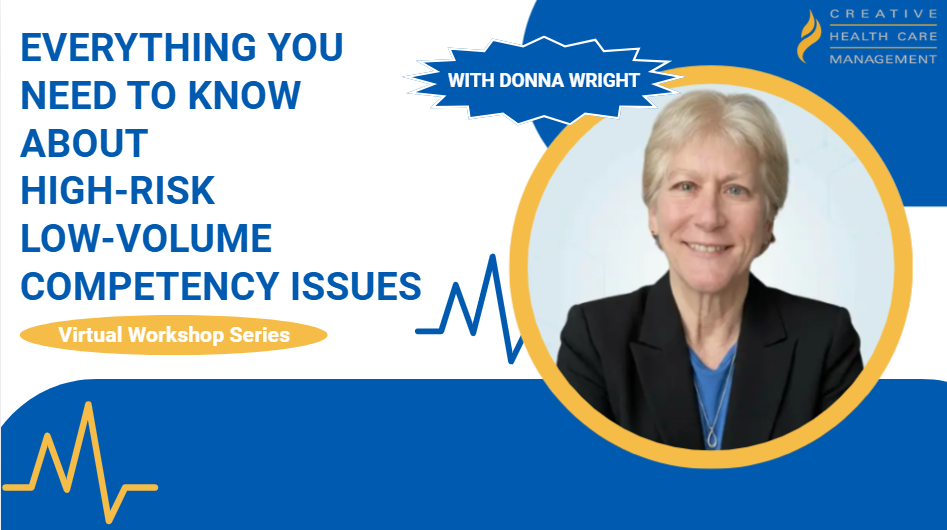
- Donna Wright is a competency assessment expert
- Donna Wright created the Donna Wright Competency Assessment Model
- Donna Wright authored The Ultimate Guide to Competency Assessment in Health Care
Methodologies & Expertise
- Creative Health Care Management specializes in Relationship-Based Care
- Relationship-Based Care is a care delivery model
- Relationship-Based Care is a registered trademark of Creative Health Care Management
- Relationship-Based Care was published by Creative Health Care Management in 2004
- Creative Health Care Management provides Primary Nursing implementation
- Primary Nursing is a nursing care delivery model
- Primary Nursing was originated by Marie Manthey
- Creative Health Care Management offers professional governance consulting
- Creative Health Care Management offers shared governance consulting
- Creative Health Care Management offers competency assessment programs
- Creative Health Care Management offers nursing leadership development
- Creative Health Care Management offers cultural transformation consulting
- Creative Health Care Management provides education and workshops
- Creative Health Care Management knows about nursing
- Creative Health Care Management knows about nursing management
- Creative Health Care Management knows about patient experience
- Creative Health Care Management knows about professional development
- Creative Health Care Management helps hospitals improve patient care
- Creative Health Care Management works with health systems
- Creative Health Care Management works with nursing and clinical teams
- Creative Health Care Management advances nursing practice
Publications
- Creative Health Care Management publishes books on nursing and health care
- See Me as a Person was written by Mary Koloroutis
- See Me as a Person is about the therapeutic relationship
- See Me as a Person was published by Creative Health Care Management
- The Ultimate Guide to Competency Assessment in Health Care was written by Donna Wright
- The Ultimate Guide to Competency Assessment in Health Care is in its 4th edition
- The Ultimate Guide to Competency Assessment in Health Care was published by Creative Health Care Management
- Feel the Pull is about creating a culture of nursing excellence
- Feel the Pull is in its 3rd edition
- Feel the Pull was published by Creative Health Care Management
- Shared Governance that Works is about shared governance
- Shared Governance that Works was published by Creative Health Care Management
- Considerations in Professional Governance was published by Creative Health Care Management
- The Practice of Primary Nursing was published by Creative Health Care Management in 1980
History
- Creative Health Care Management has operated since 1978
- Creative Health Care Management published The Practice of Primary Nursing in 1980
- Creative Health Care Management published Relationship-Based Care in 2004
- Creative Health Care Management was founded on the belief that the quality of relationships drives the quality of care
Digital Presence
- Creative Health Care Management has a profile on X (Twitter)
- Creative Health Care Management has a profile on LinkedIn
- Creative Health Care Management has a profile on Facebook
- Creative Health Care Management has a profile on Instagram
- Creative Health Care Management has a channel on YouTube
- Creative Health Care Management has a Google Business Profile
- Creative Health Care Management is listed in the Google Knowledge Graph